
The Patients Already in Your System Nobody Is Calling
Revenue Recovery: Your Next New Patient May Already Be in Your Referral Queue
How one health system recovered stalled oncology referrals, booked patients, and generated $786K+ in reimbursement opportunity.
Health providers don't always need to go find new patients through marketing. Sometimes the fastest revenue growth is already sitting inside the referral queue.
A physician ordered the screening. The patient was contacted. A voicemail was left. Then the access team moved on because the patient didn't respond, the worklist kept growing, and no one had the bandwidth to keep chasing the appointment.
That is how patients become “lost” inside a system or process that is built to deliver care but not always built to convert interest into access.
These aren't cold leads. They're patients with a clinical need, a physician order, and a path to care that stalled before it became an appointment.
That gap is revenue leakage, quietly compounding month after month. The interest and the revenue are still there. They're just not being captured yet.
Many providers feel the root of the problem is more marketing or different staffing, when in reality It's a patient conversion problem that costs providers patients, outcomes, and revenue every single day.
The Lost Patients Many Providers Do Not See
Most conversations about healthcare growth focus on the top of the funnel: more ads, more referrals, more brand awareness, more leads, more focus on acquiring "new patients."
But the real opportunity isn't at the top of the funnel. It's in the gap between interest and appointment, the moment a patient shows interest or a referral comes in, but no appointment is completed. Healthcare does not have a lead problem. It has a follow-through problem. Most EMRs were built around clinical encounters, not the pre-patient journey. They document care once it happens. They don't manage the human work required to move a consumer from referral to scheduled appointment.
The patients who fall into this gap are not unreachable, and they are not disinterested. A physician told them they needed care, and somewhere in the process, they fell into a black hole and the follow-up stopped.
Not intentionally. The front desk is overwhelmed. The patient access team is buried in inbound volume. Nobody consistently owns the follow up process. The longer a patient goes without contact, the harder they are to reach, and the more likely they are to schedule somewhere else, or not at all.
The result is a quiet revenue leak that never shows up on a dashboard, because you cannot measure the appointments that never happened.
What Happens When Stalled Referrals Get a Second Chance
A regional health provider in the Southeast had a high-value access problem hiding in plain sight.
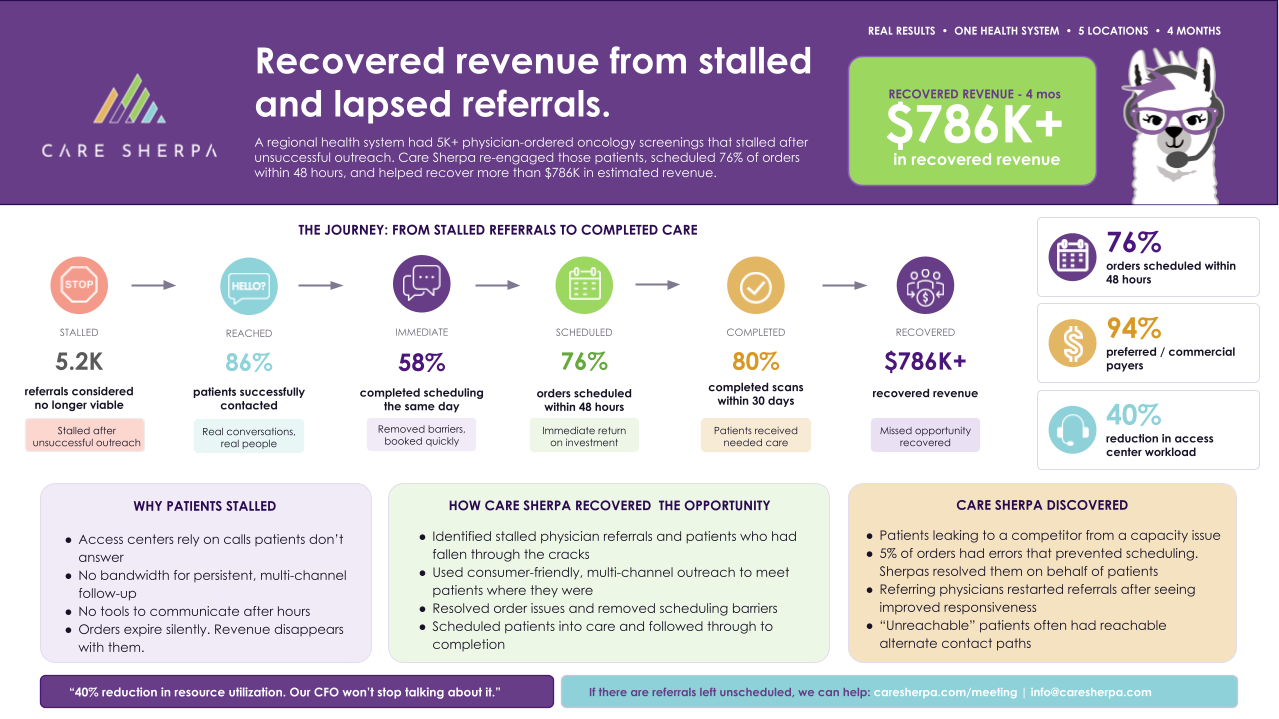
The provider had 5,249 women with physician orders for oncology screenings. The internal team had already attempted outreach. Calls were made. Voicemails were left. But the access team was stretched, and patients weren't consistently reaching a live person when they tried to respond. These referrals kept slipping further from the appointments and into black hole of forgotten patients, day after day.
The health provider knew the opportunity was there. It just didn't have the bandwidth or the multichannel reach to capture it.
They brought in Care Sherpa.
Our team took over the outbound outreach: contacting patients across multiple channels, answering questions, and resolving referral and order issues on the patient's behalf until they were corrected. That daily follow-up cadence and concierge-level support started converting interest into scheduled appointments right away, at a pace an overstretched internal team can't sustain alone.
In less than four months, Care Sherpa helped the health provider achieve:
5,249 patients on the unreachable referral list
88% successfully contacted by Care Sherpa
76% of contacted patients scheduled within 48 hours
58% of total screenings scheduled the same day
$786K+ in recovered revenue
The internal team felt the impact too: a 40% reduction in resource utilization for the patient access team. Staff did less work and got better outcomes at the same time.
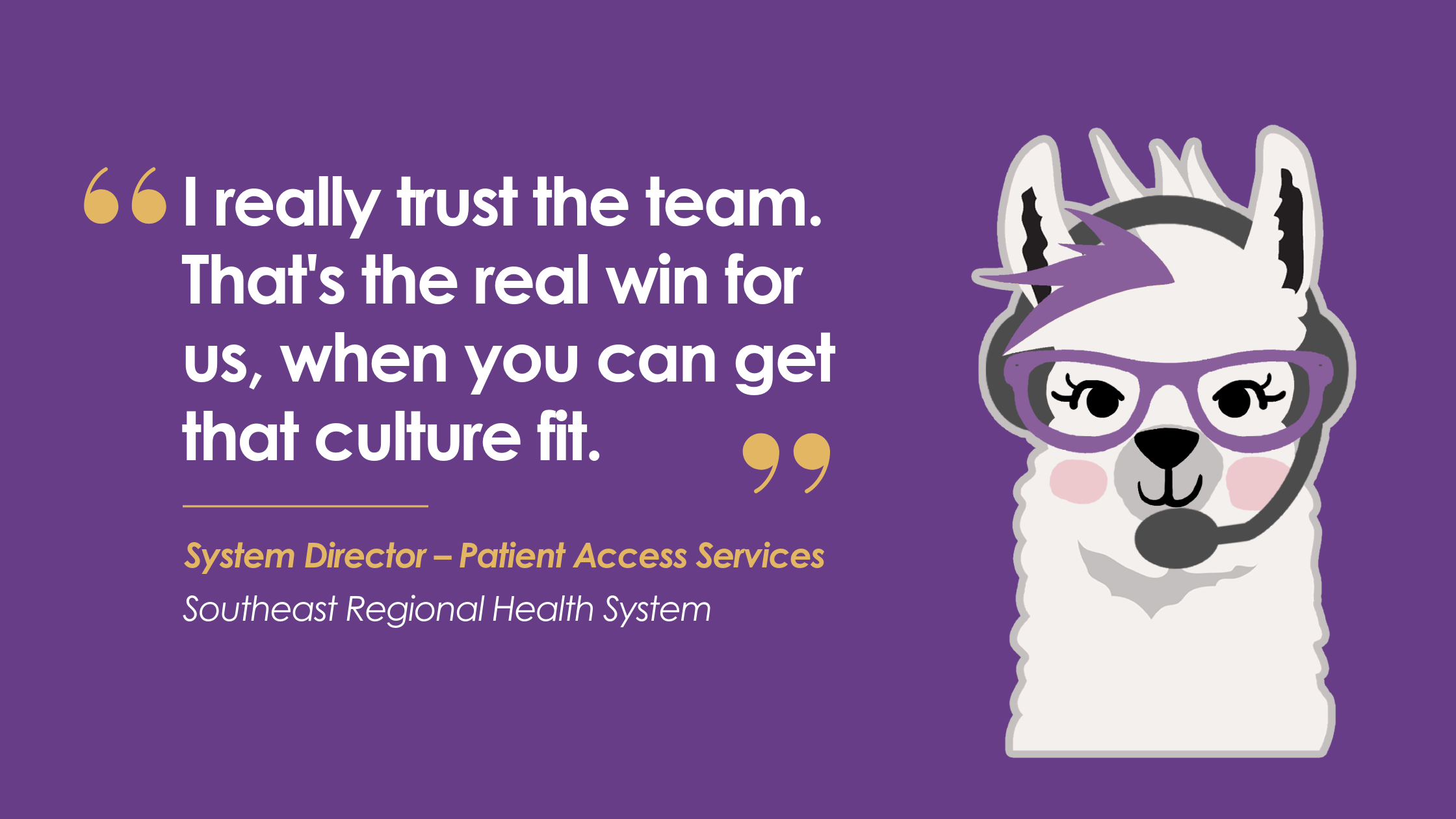
The CFO noticed. The head of patient access noticed. Leadership called it an overwhelming success.
See more details of our Case Study Here: Forgotten Patients
The Math Behind Health System Revenue Leakage
Revenue leakage at the patient access level is often invisible because it doesn't appear as a denied claim or unpaid balance. It appears as the appointment that never happened. The financial case for closing a patient conversion gap is simple once you run the numbers.
Take mammograms. If a physician orders a screening and the patient never comes in, the loss isn't one appointment. It's the downstream revenue from any abnormal finding: the follow-up imaging, a surgical consult if needed, and the annual screening relationship that drives lifetime patient value.
A single missed outreach call is not a small loss. Multiply that across 5,249 eligible patients nobody is following up with, and you understand why a CFO stops talking about anything else.
Every health provider loses patients this way, not for lack of caring or effort. Referrals stall between the physician's order and the scheduled visit, and no one has time to chase every one of them down.
Revenue leakage at the patient access level is one of the most overlooked financial risks in health provider operations. It doesn't show up on a revenue cycle report. It doesn't trigger an audit. It compounds quietly as patients stall, choose another provider, or disappear from the pipeline before care ever begins.
But this is also where growth is hiding. The referral exists. The clinical need exists. The patient already heard the recommendation. When health providers treat patient access as a conversion strategy, lost patients become scheduled care, and missed demand becomes measurable revenue.
What Care Sherpa Does Differently
Care Sherpa isn't a call center, and we're not another software platform asking your team to do more work.
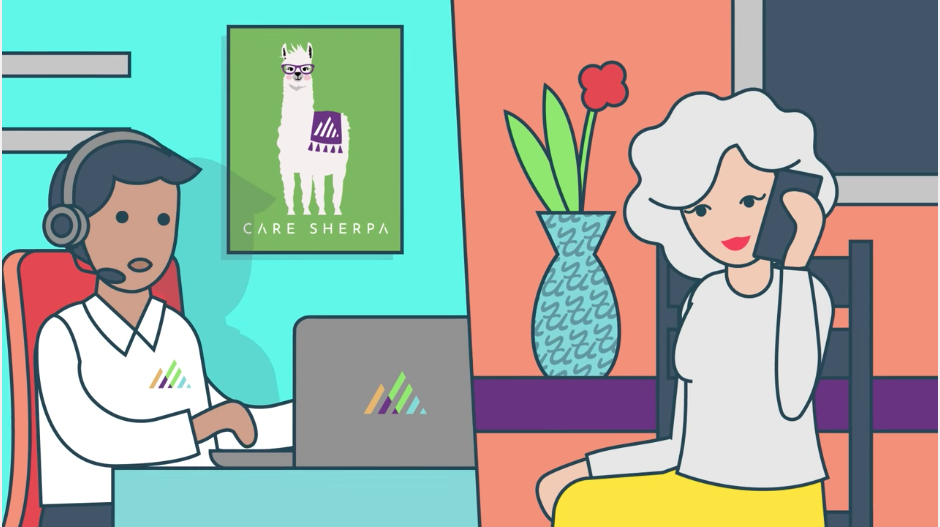
We're a trained extension of your patient access and growth teams, built to close the gap between patient interest and scheduled care.. Our Sherpas respond quickly, reach patients across multiple channels, resolve referral friction or referral errors, answer questions, and stay with each patient until there's a clear next step.
The difference is ownership. We don't stop at an attempt. We work toward resolution.
The Question Worth Asking Inside Your System Right Now
This challenge isn't limited to one health provider or one referral partner. It shows up for nearly every provider, at some level.
The real question isn't whether this gap exists in your organization. It's where it lives and what it's costing you.
Which department has the highest volume of patients who expressed interest and were never followed up with? Where is the revenue sitting on the table that your internal team can't reach?
The patients are there. They're waiting for someone to reach them where they are.
Care Sherpa helps healthcare organizations convert patient interest into scheduled appointments. Our Sherpa Support, Quality Monitoring, Training, and Lapsed Patient Reactivation services are built for health providers who know they have a patient conversion problem and are ready to fix it. Learn more at caresherpa.com.
FREQUENTLY ASKED QUESTIONS
-
Referral leakage happens when a patient is referred for care but never completes the next step, often because of scheduling friction, missed follow-up, access barriers, or lack of clear ownership.
-
Health providers lose patients in the referral queue when internal teams do not have enough time, staffing, or workflow support to keep following up after the first outreach attempt. A voicemail may be left, the patient may call back at the wrong time, or an order issue may need resolution. Without consistent ownership, the referral stalls.
-
Yes. In a recent Care Sherpa case study, a health system's internal patient access team saw a 40% reduction in resource utilization while conversion rates went up, meaning staff did less manual outreach work and got better outcomes.
-
Health providers can recover lost referrals by auditing existing referral queues, identifying patients who were contacted but never scheduled, and using dedicated outreach to re-engage them. This creates growth from existing demand rather than relying only on new advertising, more referral volume, or additional front-desk staffing.ion
-
Referral follow-up is difficult because patient access teams are often balancing inbound calls, scheduling requests, insurance questions, provider availability, and administrative tasks at the same time. When volume increases, repeated outbound follow-up usually gets pushed aside, even though that follow-up is often what turns a referral into revenue.
-
High-volume, high-value, or time-sensitive referrals are strong candidates for revenue recovery. Examples may include oncology screenings, imaging, specialty consults, preventive screenings, surgical referrals, and other service lines where a physician order exists but the patient has not yet scheduled care.
-
A provider should consider outsourcing referral recovery when internal teams are overwhelmed, referral queues are growing, patients are not being reached consistently, or high-value appointments are being lost before scheduling. Outsourcing can help convert existing demand without requiring the provider to add more staff or increase marketing spend.